Avinash

Content Spinning: One investment, infinite returns

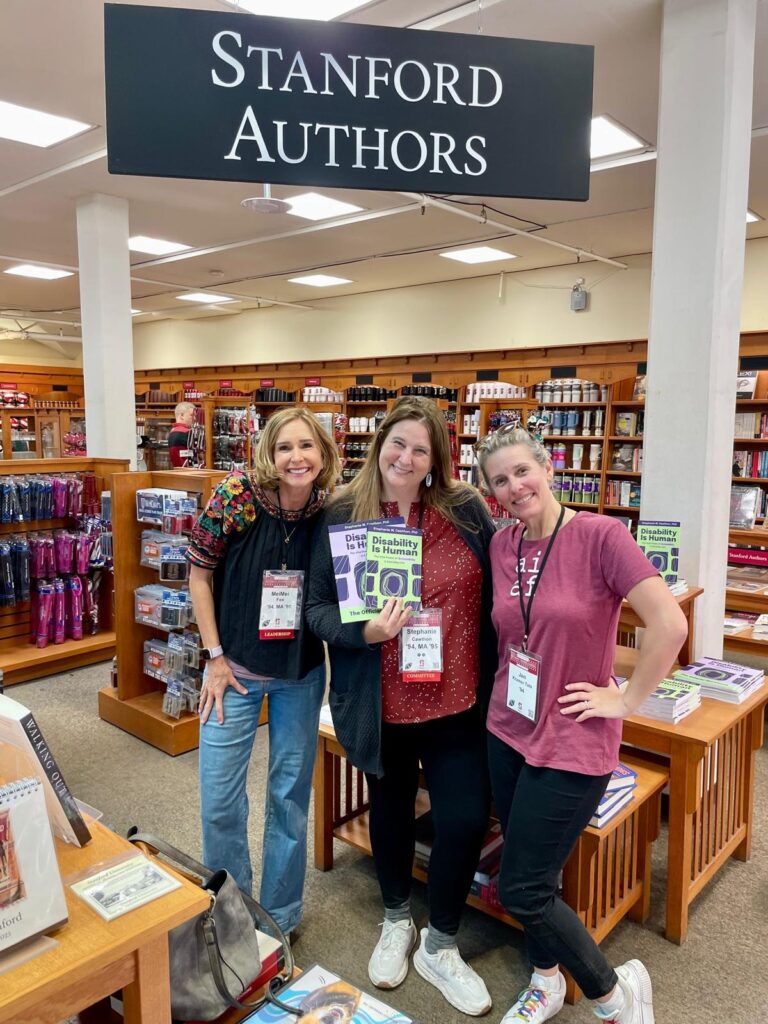
Often, when I’m interviewing potential book coaching clients, they’ll say something along the lines of, “Is it even worth it? What if only 10 people read my book?” “Well,” I reply. “First of all, if you save one person’s life, is that worthwhile? If those 10 people are your most beloved friends and family members, and they learn a deep truth about you, is that worth it? If those 10 people are your grandchildren and great-grandchildren, who might otherwise know close to nothing about your life and where they came from, is that worth it?” All valid questions, I believe. And there’s another reason why writing a book is worthwhile even if you don’t build a large audience. It’s something I’ve started calling “content spinning.” When you write a book, you are not simply creating a book. You are generating an entire world of ideas, stories, frameworks, and expertise that can be repurposed in ways most authors never consider until they’re holding that finished manuscript in their hands. The entrepreneurs, academics, and thought leaders I work with who understand this principle find themselves with a huge advantage in building their platforms, businesses, and legacies. Let me walk you through how this works. Your Book Is a Content Gold Mine Think about what goes into writing a nonfiction book: You develop frameworks and methodologies, you gather research and data, you write stories and anecdotes that illustrate your points, you interview experts and synthesize their wisdom, and you distill years of professional experience into clear, actionable insights. All of this material has a life far beyond the pages of your book. Each chapter can be broken down into nuggets of wisdom for your email newsletter, Substack, and LinkedIn posts. Then there are the expert interviews. When you’re researching your book, you’re likely speaking with brilliant people in your field. If you record those conversations with their permission, you have raw material for an entire media ecosystem. You can release the complete interviews as podcast episodes, create short video clips for YouTube Shorts, Instagram Reels, or BookTok, and pull out quotable moments for social media graphics that drive people back to your book. Your book’s core message translates beautifully into speeches, keynotes, workshops, and presentations. Several of my clients have landed paid speaking gigs specifically because they had a book to back up their expertise, and those speakers earn on average three times what non-authors earn for similar engagements. Perhaps the most lucrative form of content spinning involves evolving your book material into offerings for your coaching and consulting practice. The frameworks you develop, the case studies you share, the exercises you create for readers can all become the foundation for courses, group programs, one-on-one coaching packages, and corporate training seminars. I’ve watched authors build entire businesses on the intellectual property they developed while writing their books. The Math That Changes Everything When some aspiring authors tell me they can’t afford to invest in publishing a book, I understand where they’re coming from. Hiring editors, self-publishing, and paying for marketing support requires real money and real time. But when you look at writing a book as generating a world of content that will serve you for years to come, the calculation shifts dramatically. Dr. Stephanie Cawthon, who participated in the Your Bestselling Book course, has turned the content from her book Disability is Human into a workbook, speeches, and a thriving thought leadership platform with LinkedIn posts, media appearances, and consulting opportunities that continue to grow. When you approach your book as the seed from which an entire content garden will bloom, the investment is an obvious choice. You write once, and you harvest that material over and over again, in formats and contexts you might not have imagined when you first sat down to tell your story. Hit reply and tell me: Have you spun your book content into other formats? I’d love to hear what’s worked for you. Aloha, MeiMei TIP OF THE WEEK:  Consider Your Content Spin Before you publish your book, grab a piece of paper and map out all the ways your content could be repurposed. Draw your book in the center, then branch out: What chapters could become newsletter series? Which elements would make great components of speeches? Are there frameworks that could form the basis of a workshop or course? Did you interview anyone whose conversation could become a podcast episode? Having this map in hand will help you see the true value of what you’re creating, and it will remind you that writing a book is one of the smartest business investments you can make.

Content Spinning: One investment, infinite returns Read More »
This is a non-negotiable for your book

With social media and short-form content overloading our attention spans, the way readers consume books has fundamentally shifted. While the market for traditional books has seen a steady decline over the past few decades, the demand for audiobooks has skyrocketed, making them an absolutely non-negotiable component of your author journey. During our recent interview on The Story Cure podcast, Mary Catherine Jones, CEO of the Audiobook Experience, highlighted the staggering growth of this format. She noted that while the audiobook market stood at around $420 million a decade ago, it reached $2.2 billion by the end of 2024 and is projected to explode to $20 billion by 2030. That’s nearly 5,000% growth! Beyond the numbers, audiobooks offer a unique way to capture an audience that prefers “reading with their ears” during daily tasks like driving, gardening, or folding laundry. So, how to go about it? For authors of memoirs and thought leadership books, Mary Catherine argues that narrating your own book is essential because you are the one to deliver the message. She shared a powerful insight regarding the emotional impact of this process, stating: “telling the story with your own voice also helps complete the healing process.” By reading your story aloud, you can move beyond the initial healing found in the writing process and rewire your brain even further. However, creating a professional audiobook is more complex than simply recording it in a closet! Mary Catherine warns that technical standards for audiobooks are much stricter than for podcasts, and major platforms like Amazon—which accounts for roughly 65% of the market—will reject files that do not meet specific production specs. It is “absolutely critical to work with an experienced producer to ensure your files aren’t kicked out due to issues with noise floors or spacing,” she says. A professional production not only ensures distribution, but also uses effects to make your voice sound fuller and richer, enhancing the listener’s experience. Finally, an audiobook is not just a recording. You can see it as a versatile collection of assets that you can use to amplify your platform. You can “spin” your content (that’s my trademark phrase!) by using high-quality audio clips for Instagram reels, TikTok, or as audio samples when pitching yourself for speaking engagements. Mary Catherine suggests that you also consider including exclusive bonus material to drive listeners to your website for downloadable resources, effectively turning your audiobook into a powerful lead magnet. If you want your story to reach its full potential, it’s time to stop viewing audio as an extra and start seeing it as a cornerstone of your authority. Hit “reply” if you’d like an introduction to Mary Catherine today. Aloha, MeiMei TIP OF THE WEEK: Practice Reading Aloud Whether or not you’re ready to start recording your audiobook, you’ll benefit from reading your writing aloud. You don’t even need to have an audience! Just pull out your manuscript and start reading. Listen to how your words sound when spoken rather than written. You may want to make some edits. Regardless, you’ll rewire your brain. So that’s a win!

This is a non-negotiable for your book Read More »

The #1 Marketing Tool for Authors (and Everyone, Really)

Happy New Year, my friends! To kick off 2026 with a bang, I want to share with you a deep dive into what I consider the #1 marketing tool available to authors today: The email newsletter list. I recently sat down with Yrmis Barroeta on The Story Cure podcast to talk about this vital topic, which I feel every author needs to understand, whether you’re just starting out or you’ve been writing for decades. Yrmis helps authors, entrepreneurs and anyone who wants to be a thought leader to grow their email lists into the tens and even hundreds of thousands. What she shared during our conversation reinforced my thinking about how critical it is for you to own your audience in today’s fractured digital landscape. “Influence is money,” Yrmis said. While that might sound blunt, she went on to explain exactly what she means. When you build authentic connections with readers, followers and fans who actually want to hear from you, who have invited you into their inbox, then you’re building something that no algorithm can take away and no platform can delete overnight. The problem with social media is that when you post on Instagram or LinkedIn or TikTok, you’re essentially renting space on someone else’s property, and the landlord can kick you out whenever they feel like it. Yrmis shared a cautionary tale about a doctor who built her entire practice around her social media following, only to have her account banned without warning. Just like that, years of work and tens of thousands of followers vanished into the digital ether. Your email list, on the other hand, belongs to you. Nobody can take it away, nobody can throttle how many of your subscribers actually see your content, and nobody is going to insert paid ads between your carefully crafted words and the people who signed up specifically to read them but you. Yrmis pointed to James Clear, author of Atomic Habits, as someone who has mastered this approach. His weekly newsletter has no advertising whatsoever, and yet when he released his Atomic Habits workbook, he sold millions of copies in days because he was able to recommend his new book directly to his list. The newsletter was the original engine that drove his book sales, as well as his speaking engagements and an entire empire of influence, all without having to play the exhausting social media marketing game that so many of us dread. People with engaged newsletter audiences of 10,000 or more subscribers can attract corporate sponsors willing to pay up to $5,000 per issue, which means your weekly email could also become a significant revenue stream in its own right. Tim Ferriss figured this out years ago, and his email list remains the cornerstone of everything he does, from podcast promotion to product launches to keeping his readers informed about what matters most to him. What I love about Yrmis’s philosophy is that she approaches email marketing as a form of service rather than salesmanship. The goal is to provide genuinely valuable content that your readers look forward to receiving. When you treat their attention as the precious gift it actually is, you can create a two-way conversation where engagement flows in both directions. With social media, you’re shouting into the void. With email, you can actually track who opens, who clicks, and who responds. If you’d like to join me and several Your Bestselling Book coaching clients in growing your email newsletter list, then just hit “Reply” and ask for a personal introduction to Yrmis herself. Aloha, MeiMei P.S. You can watch my full conversation with Yrmis on The Story Cure YouTube channel, where we dive even deeper into the specific strategies she uses to help authors build lists that actually convert. TIP OF THE WEEK: Start Before You’re Ready If you don’t have an email newsletter yet, start one this week. You don’t need tens of thousands of subscribers to begin, and you don’t need perfect branding or a fully formed content strategy. What you need is a simple way to collect email addresses from people who want to hear from you, whether that’s through your website, at speaking events, or from readers who finish your book and want more. If you want a ready-made tool, try Substack. It’s become a wildly popular tools for authors and readers. You can easily start your newsletter there, and retain direct contact with your audience. It also acts like a social media platform, so you can follow other authors, like and comment on their content, and build a network of people who will recommend your book when the time comes. The key is to show up consistently with content that actually helps your readers. Quality trumps frequency every time. Don’t overwhelm your subscribers with daily emails they’ll learn to ignore. Rather, give them something worth opening when you do appear in their inbox. (I publish The Next Chapter once a week.) Let me know how it goes!

The #1 Marketing Tool for Authors (and Everyone, Really) Read More »